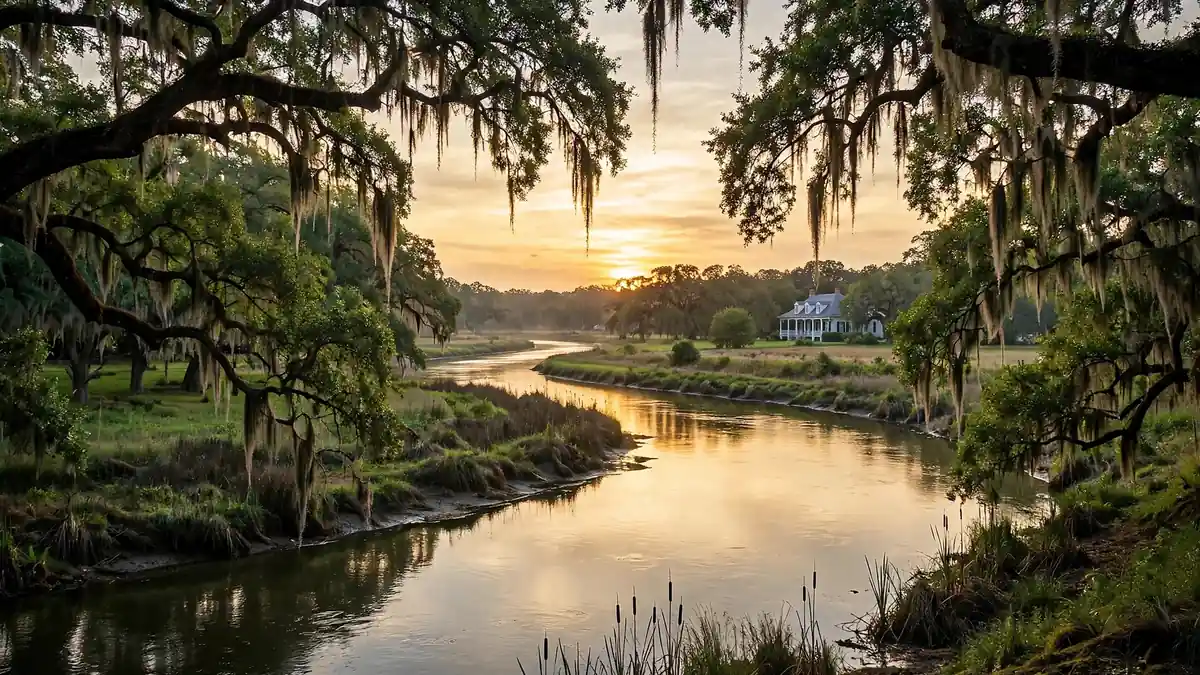
Main image: AI illustration.
Cane River Creole in numbers means 116,000 acres, 65 historic structures, and fewer than 10,000 speakers (U.S. Senate, 2010; National Park Service, 2018; Wendte, 2024).
Those speakers use Kouri-Vini, the French-based Creole language of Louisiana (Wendte, 2024).
Congress created both the national historical park and the heritage area in November 1994 (U.S. Senate, 2010).
That single year anchors every count that follows.
Read the figures below as a documented floor, not a complete census.
Where sources disagree, this article prints both counts and names the source it trusts.
Summary
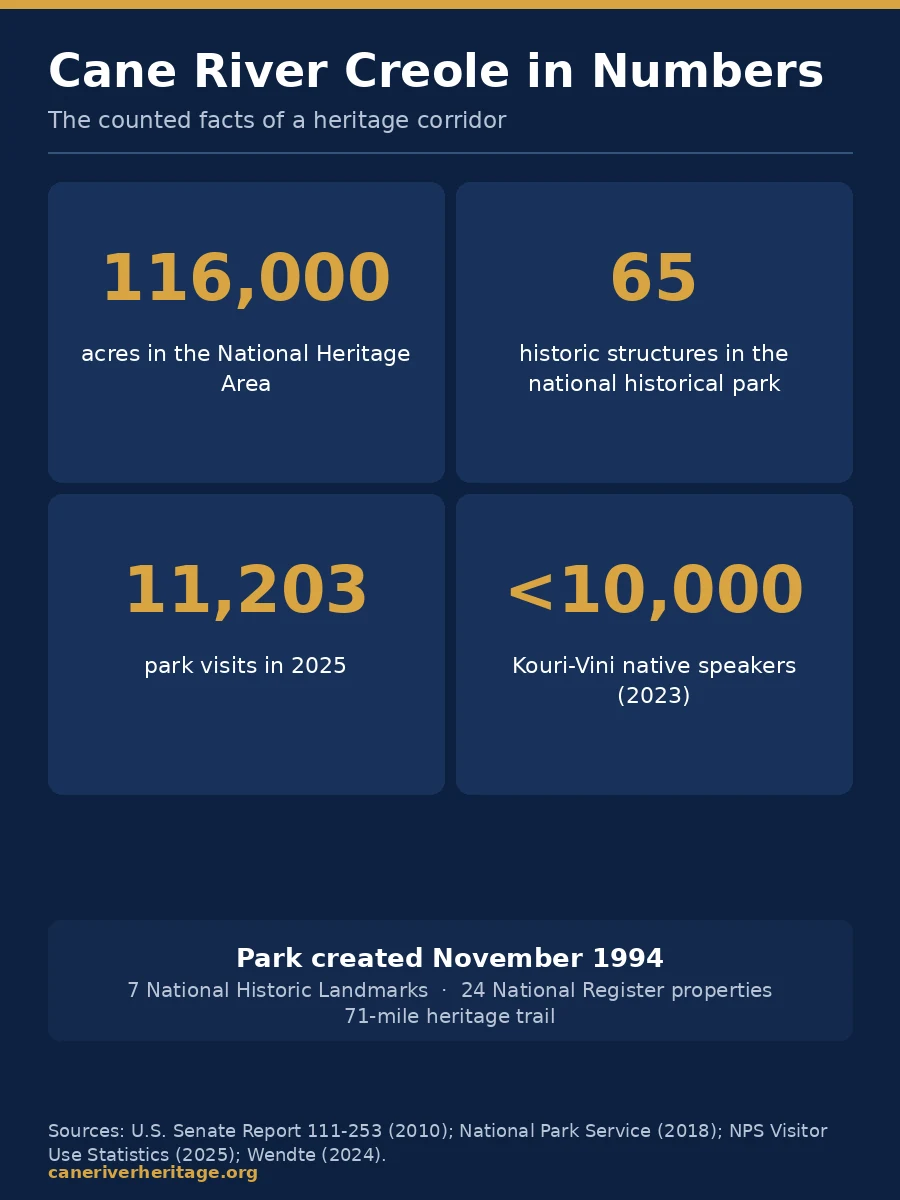
- Scale: a 116,000-acre heritage area runs about 35 miles along Cane River Lake (U.S. Senate, 2010).
- Park: Cane River Creole National Historical Park holds 62.36 acres, 65 structures, and about 500,000 artifacts (National Park Service, 2018).
- Visits: park visits fell to 11,203 in 2025, down 62.6% from 29,922 in 2019 (NPS Visitor Use Statistics, 2025).
- People: Isle Brevelle covers about 18,000 acres, and Kouri-Vini counts fewer than 10,000 speakers (National Park Service, undated; Wendte, 2024).
The Heritage Area and the Park at a Glance
One federal designation covers the whole corridor, while a far smaller park protects two plantations inside it.
Congress set the pattern in 1994: a heritage area for the landscape, plus a national historical park for Oakland and Magnolia (U.S. Senate, 2010).
Seven National Historic Landmarks stand inside the heritage area, alongside three state historic sites (U.S. Senate, 2010).
Twenty-four properties in the area appear on the National Register of Historic Places (Congressional Record, 2008).
Natchitoches itself contributes a 33-block National Historic Landmark District (Explore Louisiana, undated).
The 71-mile scenic byway along the corridor is the Cane River National Heritage Trail, not the shorter Isle Brevelle Trail (Louisiana scenic byways list).
| Measure | Figure |
|---|---|
| Heritage area | About 116,000 acres |
| Corridor length | About 35 miles |
| National Historic Landmarks | 7 |
| State historic sites | 3 |
| National Register properties | 24 |
| Natchitoches landmark district | 33 blocks |
| Historical park, cultural landscape | 62.36 acres |
| Historical park, historic structures | 65 |
| Historical park, artifacts | About 500,000 |
| Oakland Plantation, park land | 42 acres |
| Magnolia Plantation, park land | 18 acres |
| Heritage trail, scenic byway | 71 miles |
Heritage area and park at a glance (Table 1). Sources: U.S. Senate Report 111-253 (2010), NPS management page (2018), Congressional Record (2008), Explore Louisiana, Explore Natchitoches, and Louisiana scenic byways list
A 19-member commission, mostly local residents, administers the heritage area (U.S. Senate, 2010).
Oakland came into the park system in 1998, four years after the park itself (Cane River National Heritage Area, undated).
Fewer Visitors Each Year Since 2019
Park visits peaked in the figures available at 29,922 in 2019 (NPS Visitor Use Statistics, 2019).
Visits then dropped to 17,430 in 2020, down 41.7%, and to 14,984 in 2021, down 14.0% (NPS Visitor Use Statistics, 2021).
By 2024 the count stood at 12,592, and 2025 recorded 11,203 (NPS Visitor Use Statistics, 2025).
| Year | Recreation visits | Change from prior listed year |
|---|---|---|
| 2019 | 29,922 | — |
| 2020 | 17,430 | −41.7% |
| 2021 | 14,984 | −14.0% |
| 2022 | 14,811 | −1.2% |
| 2023 | 11,701 | −21.0% |
| 2024 | 12,592 | +7.6% |
| 2025 | 11,203 | −11.0% |
Park visitation by year (Table 2). Counts come from NPS Visitor Use Statistics, as reported for each year and read 23 November 2026, with changes calculated from the published counts
Counts for 2022 and 2023 come from the National Park Service visitor spending reports, which publish the same recreation-visit figures.
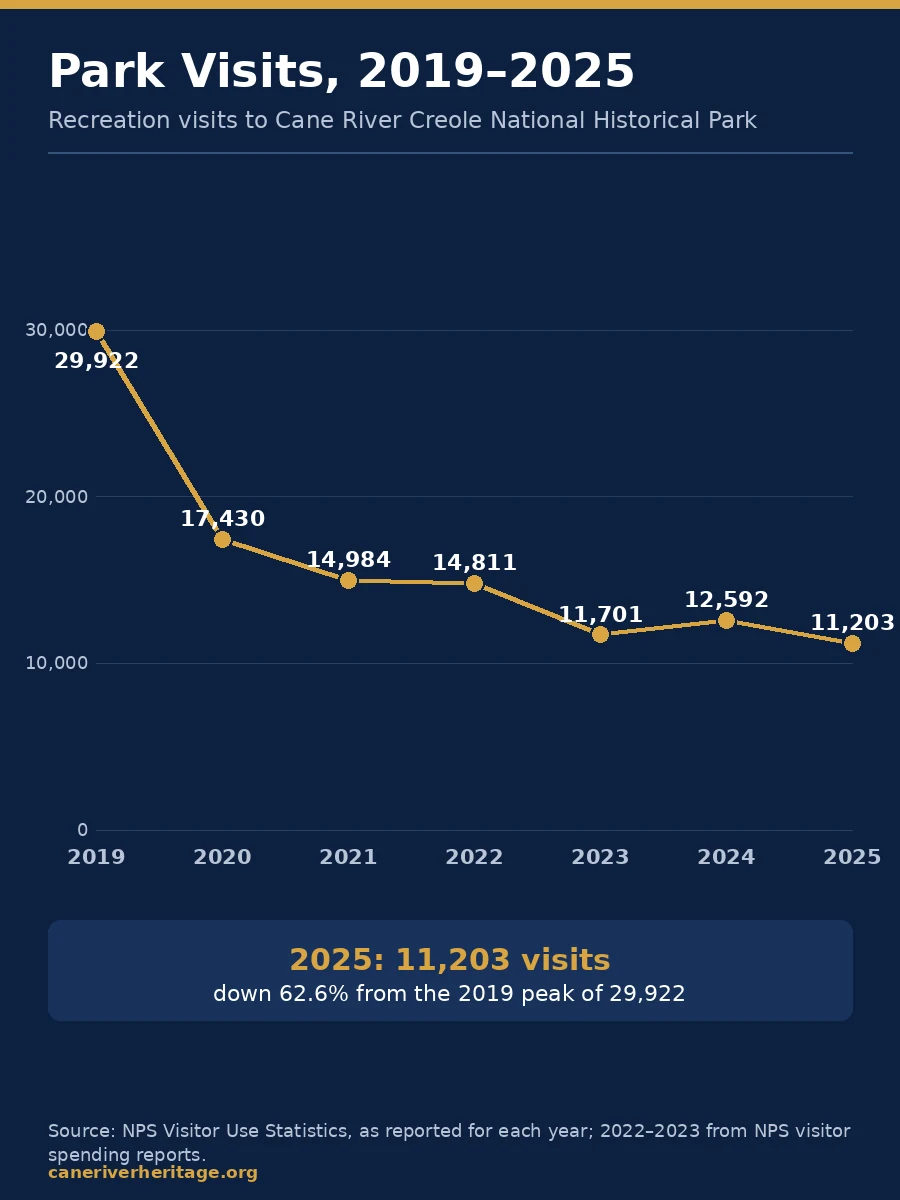
Falling visits do not prove falling interest, since counts track entries, not readers, researchers, or festival crowds.
Still, the direction is plain: 2025 drew little more than one-third of the 2019 total.
Isle Brevelle and the Coincoin Land Record
Isle Brevelle sits between Cane River and Bayou Brevelle, covering about 18,000 acres (Explore Natchitoches, undated).
Descendant families still hold about 16,000 of those acres, or 88.9% of the whole (Explore Natchitoches, undated).
Marie Thérèse Coincoin was born enslaved in 1742 and died in 1816 (Mills, 2008).
Claude Thomas Pierre Métoyer bought her freedom in 1778, after a parish priest threatened her sale (Mills, 2008).
Coincoin bore ten children with Métoyer and five from an earlier union (Mills, 2008).
| Measure | Figure |
|---|---|
| Isle Brevelle, total | About 18,000 acres |
| Isle Brevelle, descendant-held | About 16,000 acres |
| Descendant-held share | 88.9% |
| Coincoin, first grant | 80 arpents, or 67 acres |
| First grant, conceded | January 1787 |
| First grant, patented | May 1794 |
| Coincoin, second grant | 800 arpents, or about 667 acres |
| Coincoin, documented holdings | Over 1,000 acres |
| Coincoin, children with Métoyer | 10 |
| Coincoin, children from earlier union | 5 |
Isle Brevelle and Coincoin land (Table 3). Figures come from Explore Natchitoches and Mills (2008), with Coincoin grants from Mills (2012), and shares calculated from the published acreage
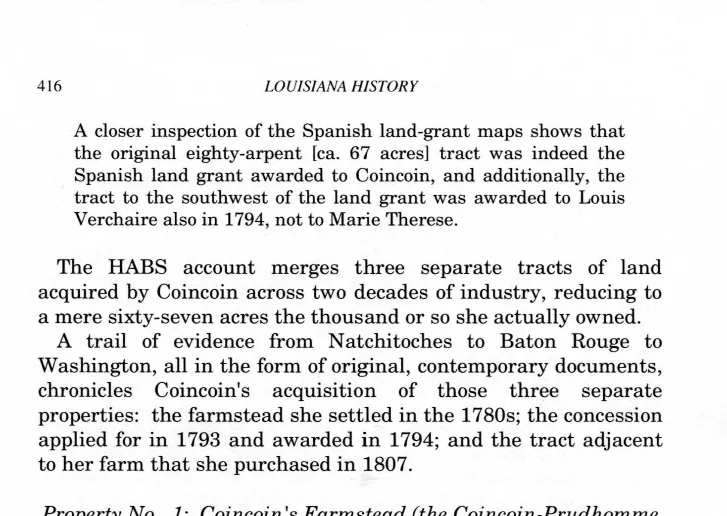
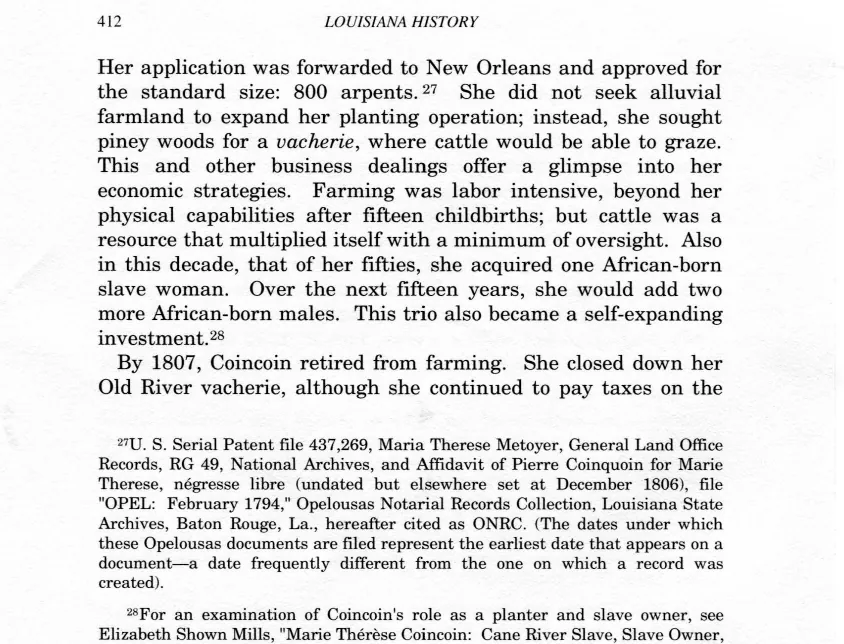
Melrose Plantation was not Coincoin’s grant, despite the popular story.
Records trace that land to her son Louis Métoyer, who built most of its surviving buildings (Mills, 2012).
Buildings That Survive, Counted
Oakland keeps 17 of its original outbuildings, including two pigeonniers and a mule barn (Cane River National Heritage Area, undated).
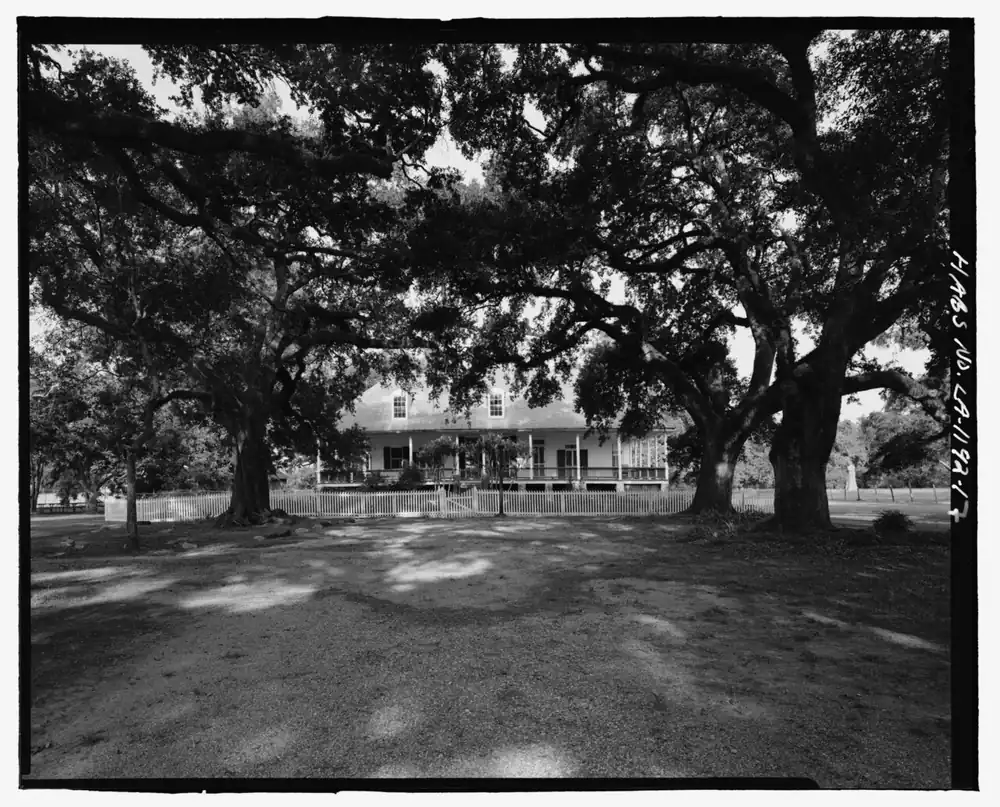
Enslaved African Americans most likely built the main house in 1821 (National Park Service, undated).
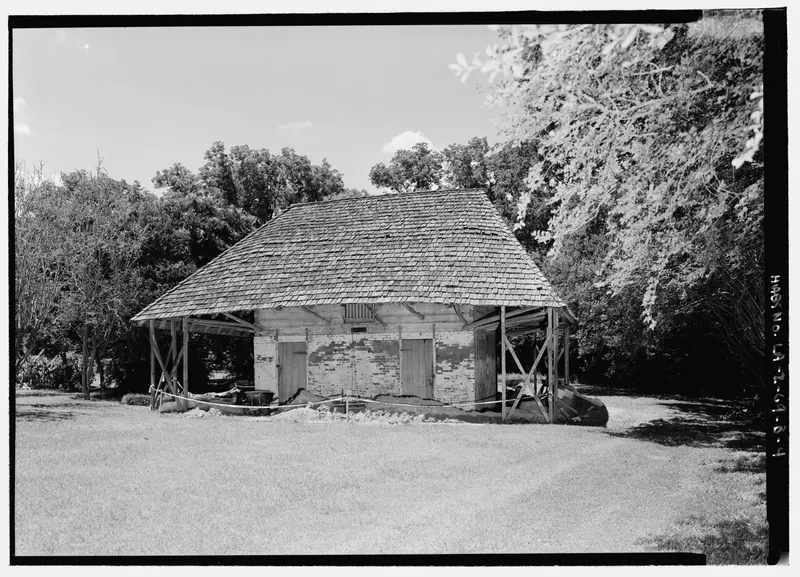
Magnolia holds 21 standing historic buildings and structures, including eight brick slave houses (National Park Service, undated).
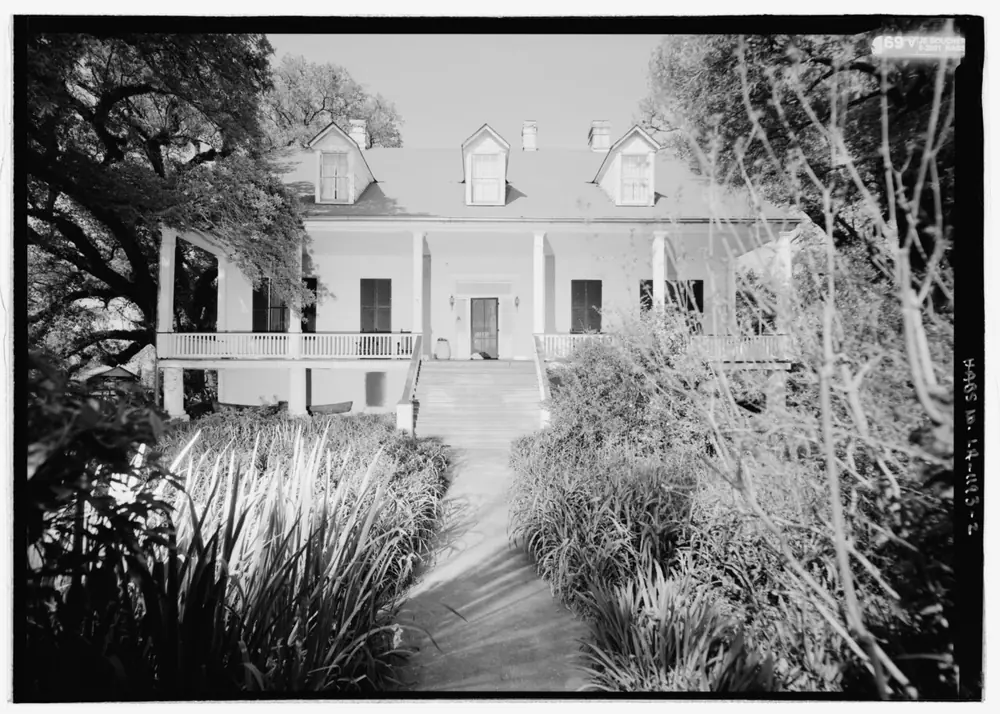
Eight cabins in a double row housed enslaved workers at Magnolia, most holding two families each (National Park Service, undated).
| Building or site | Count or date |
|---|---|
| Oakland, original outbuildings surviving | 17 |
| Oakland, main house built | 1821 |
| Oakland, bottle garden | 1835 |
| Magnolia, standing historic buildings | 21 |
| Magnolia, brick slave houses | 8 |
| Magnolia, outbuilding land | 18 acres |
| Badin-Roque House, National Register listing | 6 June 1980 |
| Badin-Roque House, date range | c. 1770s to early 19th century |
| Roque House, built | 1803 |
| Roque House, moved to Natchitoches | 1967 |
| St. Augustine Church, consecrated | 19 July 1829 |
| St. Augustine Church, current building dedicated | 15 February 1917 |
| St. Augustine Church, National Register listing | 24 September 2014 |
| Coincoin-Prudhomme House, National Register listing | 6 December 1979 |
Surviving buildings and their dates (Table 4). Records: National Park Service, NPS National Register nominations, Natchitoches Convention and Visitors Bureau, and Saint Augustine Catholic Church
Badin-Roque House carries two dates because sources disagree, and neither side is settled here.
Its National Register nomination puts construction in the early 19th century (National Park Service, 1979).
An NPS preservation plan dates it to about the 1770s (National Park Service, undated).
Roque House is a different building from Badin-Roque House (Natchitoches Convention and Visitors Bureau, undated).
Yves Pacale, a freed man of color, built it in 1803 (Natchitoches Convention and Visitors Bureau, undated).
Saint Augustine also carries two dates.
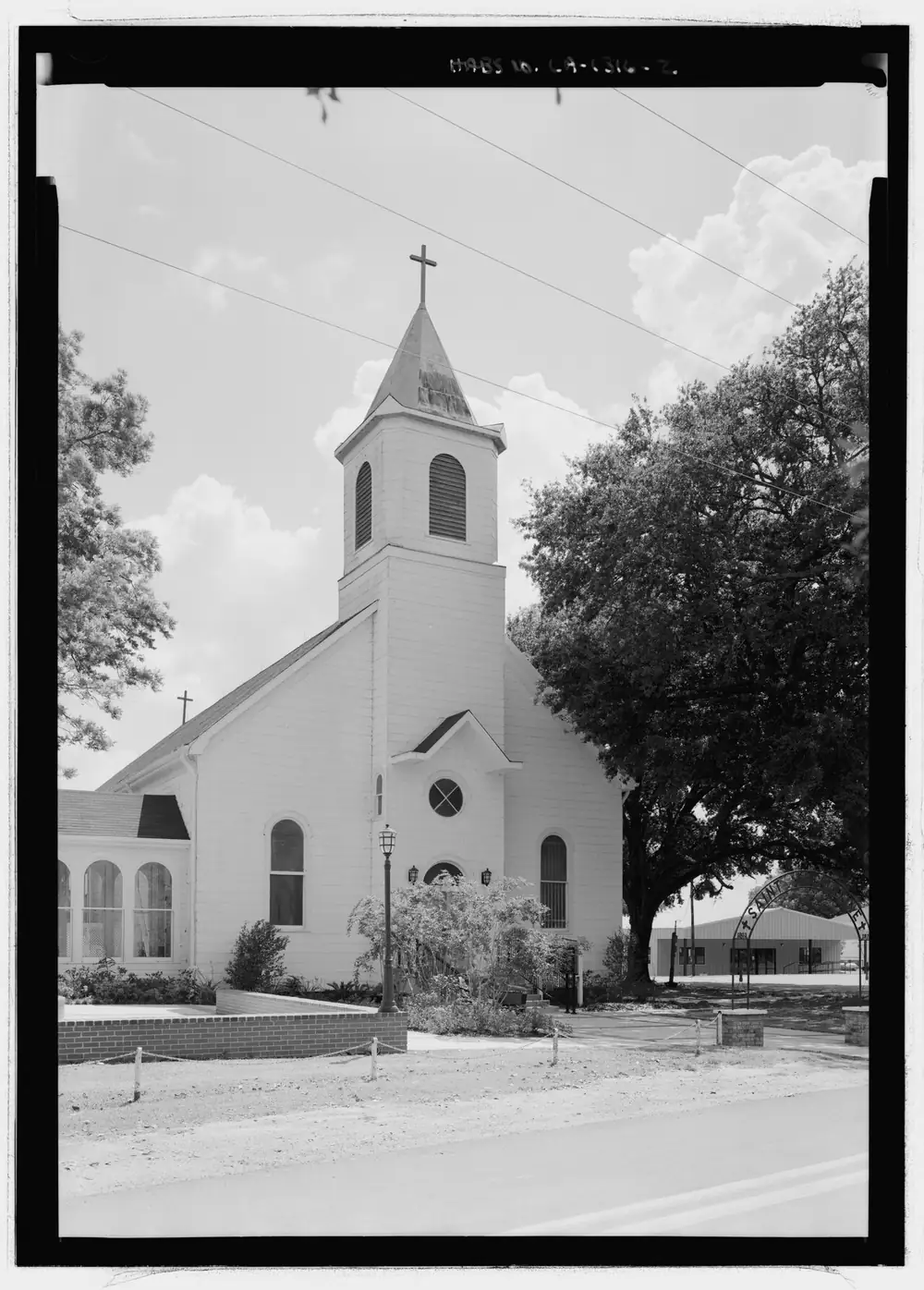
Parish records document consecration on 19 July 1829 (Saint Augustine Catholic Church, undated).
Local tradition dates the first church to 1803 (Saint Augustine Catholic Church, undated).
Two Lives in Numbers: Hunter and Chopin
Clementine Hunter was born in late December 1886 or early January 1887, and died on 1 January 1988 (64 Parishes, undated).
Her life spanned about 101 years, most of them working at Melrose Plantation (64 Parishes, undated).
Hunter painted nine African House murals between 8 June and 21 July 1955 (Louisiana Office of Culture, Recreation and Tourism, 2015).
That span covers 44 days.
Two panels measure 48 by 96 inches, and she was approximately 67 when she painted them (Louisiana Office of Culture, Recreation and Tourism, 2015).
| Measure | Hunter | Chopin |
|---|---|---|
| Born | Late 1886 or early 1887 | 1850 |
| Died | 1 January 1988 | 1904 |
| Age at death | About 101 | 54 |
| Cane River years | About 1900 to 1988 | 1880 to 1883 |
| Defining work, year | Murals, 1955 | Bayou Folk, 1894 |
| Defining work, count | 9 murals in 44 days | 23 stories |
| First solo museum show | Delgado Museum, 1955 | — |
| Honorary doctorate | Northwestern State, 1986 | — |
| Landmark house, listed | — | 9 April 1993 |
| Landmark house, lost | — | Fire, 1 October 2008 |
| Landmark status withdrawn | — | 23 December 2016 |
Two lives side by side (Table 5). Drawn from 64 Parishes, Louisiana Office of Culture, Recreation and Tourism (2015), National Park Service, and Kate Chopin House records
Kate Chopin moved to Cloutierville with her husband Oscar and lived from 1880 to 1883, returning to Saint Louis in 1883 (National Park Service, undated).
Oscar died of malaria in December 1882, and Chopin ran the family business herself for about two years (64 Parishes, undated).
Bayou Folk appeared in 1894 with 23 stories (Internet Archive, undated).
A Night in Acadie followed in 1897, and The Awakening in 1899 (64 Parishes, undated; National Park Service, undated).
Her Cloutierville house burned on 1 October 2008, so it no longer stands (National Park Service, undated).
Language, Food, and the Research Archive
Kouri-Vini counts fewer than 10,000 native speakers as of 2023 (Wendte, 2024).
Wendte puts first-language speakers at about 5,000, plus several hundred second-language users (Mayeux, 2019, in Wendte, 2024).
Speakers concentrate in three areas: Saint Martin Parish, Pointe Coupee Parish, and the Mississippi River parishes between New Orleans and Baton Rouge (Wendte, 2024).
| Measure | Figure |
|---|---|
| Kouri-Vini, native speakers | Fewer than 10,000 (2023) |
| Kouri-Vini, first-language speakers | About 5,000 (2019) |
| Kouri-Vini, second-language users | Several hundred (2019) |
| Kouri-Vini, vitality rating | 8a, Moribund (EGIDS) |
| Kouri-Vini, speaker concentration areas | 3 |
| Natchitoches meat pie, first documented | 1826 |
| Natchitoches meat pie, Lasyone’s opened | 1967 |
| Natchitoches meat pie, official state meat pie | 2003 |
| Natchitoches meat pie, first festival | Fall 2002 |
| NSU Creole Heritage Center, library items | Over 5,000 |
| NSU Creole Heritage Center, family database names | Over 9,500 |
| Louisiana African American Heritage Trail, sites in 2008 | 26 |
| Louisiana African American Heritage Trail, sites in 2022 | 38 |
Language, food, and research (Table 6). Citations: Wendte (2024), Mayeux (2019), 64 Parishes, Louisiana State Legislature (2003), Northwestern State University (2026), Louisiana Office of Tourism (2022), and Food Republic
Meat pie history starts with a missionary’s journal, not a restaurant.
Timothy Flint described meat pies near Natchitoches in a travel journal published in 1826 (64 Parishes, undated).
Lasyone’s Meat Pie Kitchen opened in 1967 and made the pie widely available (64 Parishes, undated).
Louisiana named the Natchitoches meat pie its official state meat pie in 2003 (Louisiana State Legislature, 2003).
Key Dates, 1714–2025
| Year | Event |
|---|---|
| 1714 | Natchitoches founded, the oldest permanent settlement in the Louisiana Purchase |
| 1742 | Marie Thérèse Coincoin born enslaved, August 1742 |
| 1778 | Métoyer buys Coincoin’s freedom |
| 1787 | Coincoin’s 80-arpent grant conceded, January 1787 |
| 1794 | Coincoin’s grant patented, May 1794 |
| 1803 | Roque House built; St. Augustine first church dated by tradition |
| 1821 | Oakland main house most likely built |
| 1826 | Meat pies first documented near Natchitoches |
| 1829 | St. Augustine chapel consecrated, 19 July 1829 |
| 1856 | St. Augustine becomes a parish in its own right, 11 March 1856 |
| 1859 | Oakland counts 145 enslaved people in 30 dwellings |
| 1894 | Kate Chopin publishes Bayou Folk, 23 stories |
| 1917 | Current St. Augustine building dedicated, 15 February 1917 |
| 1955 | Hunter paints nine African House murals, 8 June to 21 July |
| 1967 | Lasyone’s opens; Roque House moved to Natchitoches |
| 1980 | Badin-Roque House listed on the National Register, 6 June 1980 |
| 1988 | Clementine Hunter dies, 1 January 1988, aged about 101 |
| 1994 | Park and heritage area created, November 1994 |
| 2003 | Meat pie named official state meat pie |
| 2008 | Kate Chopin House destroyed by fire, 1 October 2008 |
| 2014 | St. Augustine listed on the National Register, 24 September 2014 |
| 2019 | Park visits peak in available figures at 29,922 |
| 2025 | Park visits fall to 11,203; Hunter murals turn 70 |
Key dates from 1714 to 2025 (Table 7). Dates as cited in the sections above
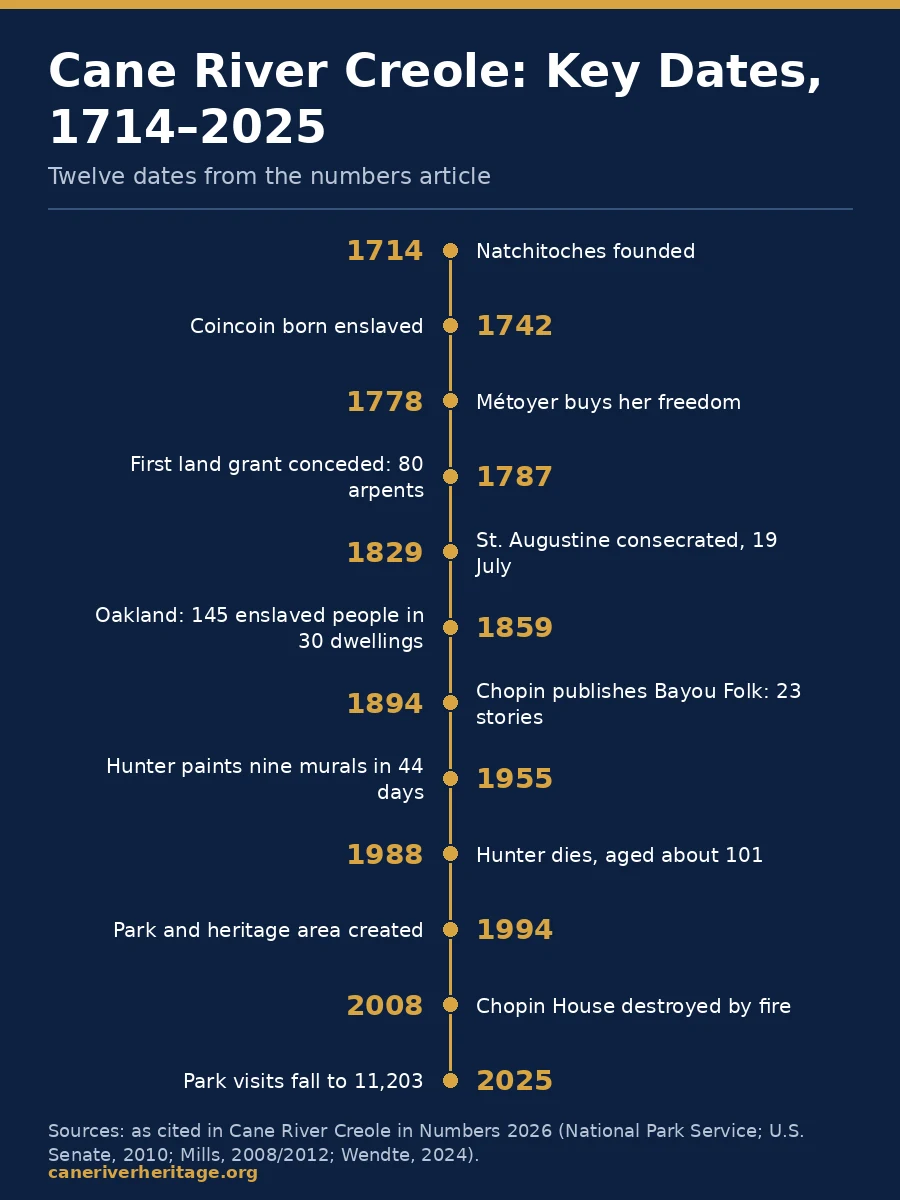
Oakland’s 1859 count deserves its own line: 145 enslaved people lived in 30 dwellings (National Park Service, undated).
They produced 698 bales of cotton and 7,000 bushels of corn (National Park Service, undated).
Those four figures describe forced labour, not prosperity, and this article keeps them in that frame.
What the Numbers Do Not Show
Attendance figures for the Creole Heritage Celebration or the Natchitoches–NSU Folk Festival were not found in verifiable sources.
No verified visitor counts were found for Melrose Plantation or Saint Augustine Church as separate sites.
No parish-level count of Kouri-Vini speakers in Natchitoches Parish was found, so the language figures stay statewide.
Artifact counts disagree: the NPS management page reports about 500,000 artifacts, while other park descriptions report over 1,000,000 (Cane River National Heritage Area, undated).
This article uses the management page figure and records the disagreement here rather than hiding it.
How to Use These Numbers
Researchers and genealogists will find the densest material in the land, building, and archive tables above.
Casual readers who want the story behind the figures should start with the pillar guide instead.
Start here: Cane River Creole Culture and History: The Complete Guide.
These numbers suit planning, teaching, and family-history research, and they do not suit trip planning.
Opening hours, ticket prices, and tour times change, so check the official park and heritage area sites before visiting.
Frequently Asked Questions
How big is the Cane River National Heritage Area?
Roughly 116,000 acres, running about 35 miles along Cane River Lake (U.S. Senate, 2010).
The national historical park inside it is far smaller, at 62.36 acres of cultural landscape (National Park Service, 2018).
How many people visit Cane River Creole National Historical Park each year?
Visits totalled 11,203 in 2025, down from 12,592 in 2024 (NPS Visitor Use Statistics, 2025).
Peak visits in the figures available reached 29,922 in 2019 (NPS Visitor Use Statistics, 2019).
How many Kouri-Vini speakers are left?
Fewer than 10,000 native speakers remained as of 2023 (Wendte, 2024).
Some 5,000 of them speak it as a first language (Mayeux, 2019, in Wendte, 2024).
How long did Clementine Hunter take to paint the African House murals?
Nine murals took her 44 days, from 8 June to 21 July 1955 (Louisiana Office of Culture, Recreation and Tourism, 2015).
Hunter was approximately 67 at the time, and two panels measure 48 by 96 inches (Louisiana Office of Culture, Recreation and Tourism, 2015).
When was Saint Augustine Church built, 1803 or 1829?
Parish records document consecration on 19 July 1829, while local tradition dates the first church to 1803 (Saint Augustine Catholic Church, undated).
Both dates appear in this article because the sources disagree, and neither side is settled here.
Methodology
Figures come from National Park Service pages and nominations, a U.S. Senate report, and Louisiana state law.
Northwestern State University, 64 Parishes, and the peer-reviewed language snapshot by Wendte (2024) supplied the rest.
Research ran on 23 November 2026, and most figures were read from the source named beside them before drafting.
Visitation figures, trail counts, and Coincoin grants were read from secondary pages reporting those sources.
Percentages in the tables were calculated from the published counts, and the calculation is stated wherever it appears.
Disputed dates appear as ranges or as both dates, never as a single settled year.
Chopin birth and death years come from 64 Parishes, and her Cane River years from the Kate Chopin House page (National Park Service, undated).
Limits: festival attendance, Melrose visits, and parish-level speaker counts were not found in verifiable sources.
References
- Cane River Creole Park Visits Fall to 11,203 in 2025, Lowest in the Figures Available
- Kouri-Vini Counts About 5,000 First-Language Speakers, Wendte Snapshot Finds
- Seventy Years On, Clementine Hunter’s Nine African House Murals Still Tell the Cane River Story
- Cane River Creole National Historical Park, Management
- Cane River National Heritage Area, Senate Report 111-253
- Louisiana Creole (Louisiana, USA) — Language Snapshot, Wendte 2024
- Clementine Hunter Murals, Louisiana Office of Culture, Recreation and Tourism
- Natchitoches Meat Pies, 64 Parishes
- Creole Heritage Center, Northwestern State University
- Badin-Roque House, National Register Nomination
- Cane River Creole National Historical Park, National Park Service
- Louisiana State Meat Pie, Louisiana State Legislature
- St. Augustine Catholic Church and Cemetery, National Register
- Documenting a Slave’s Birth, Parentage, and Origins: Marie Thérèse Coincoin, 1742–1816 (National Genealogical Society Quarterly, 2008)
- Demythicizing History: Marie Thérèse Coincoin, Tourism, and the National Historical Landmarks Program (Louisiana History, 2012)
- Kate Chopin House, National Park Service
- Kate Chopin, 64 Parishes
- Bayou Folk, Internet Archive
- Clementine Hunter, 64 Parishes
- Roque House and Gardens, Natchitoches Convention and Visitors Bureau
- Cane River Creole National Historical Park, Cane River National Heritage Area
- Louisiana Trails and Byways, Cane River National Heritage Trail Scenic Byway
- Magnolia Plantation History, National Park Service
- Badin-Roque House Preservation Study, 2018, National Park Service DataStore (Reference 2286659)
- Congressional Record, Senate, 1 August 2008 (S. 3448)
- 10 Things to Do in Natchitoches, Explore Louisiana
- Isle Brevelle, Explore Natchitoches
- Our History, St. Augustine Catholic Church
- Maison de Marie Therese — National Register of Historic Places Inventory-Nomination Form (National Park Service, 1979)
- The Multi-Cultural Origins of Louisiana’s Official State Meat Pie, Food Republic