Category: News

  • Cane River Creole Park Visits Fall to 11,203 in 2025, Lowest in the Figures Available

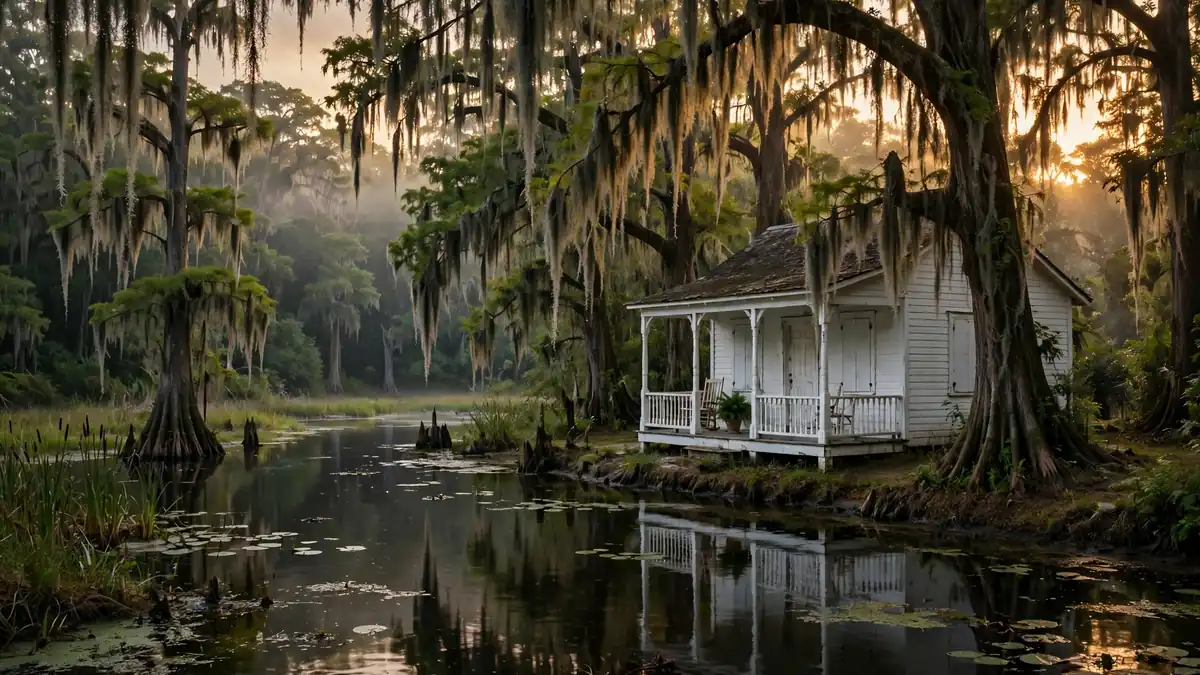
    Main image: AI illustration.

    Cane River Creole National Historical Park recorded 11,203 recreation visits in 2025 (NPS Visitor Use Statistics, 2025).
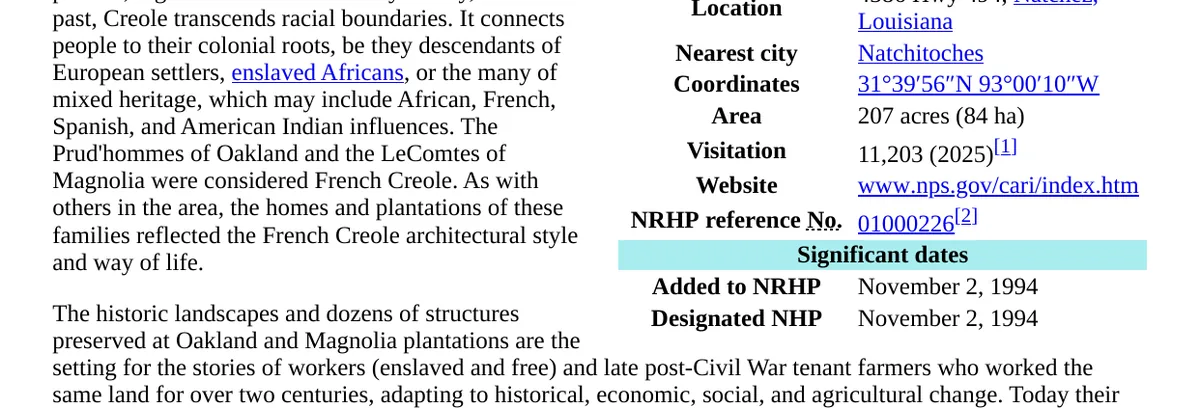
    Wikipedia, Cane River Creole National Historical Park (citing NPS): visitation 11,203 (2025).

    That count sits 11.0% below the 12,592 visits of 2024 (NPS Visitor Use Statistics, 2025).

    It also sits 62.6% below the 29,922 visits of 2019, the peak in the figures available (NPS Visitor Use Statistics, 2019).

    The 2025 Count

    Eleven thousand two hundred three visits is the lowest annual count in the seven years this report could verify.

    Park staff count recreation visits at Oakland and Magnolia, the park’s two plantation units (National Park Service, 2018).
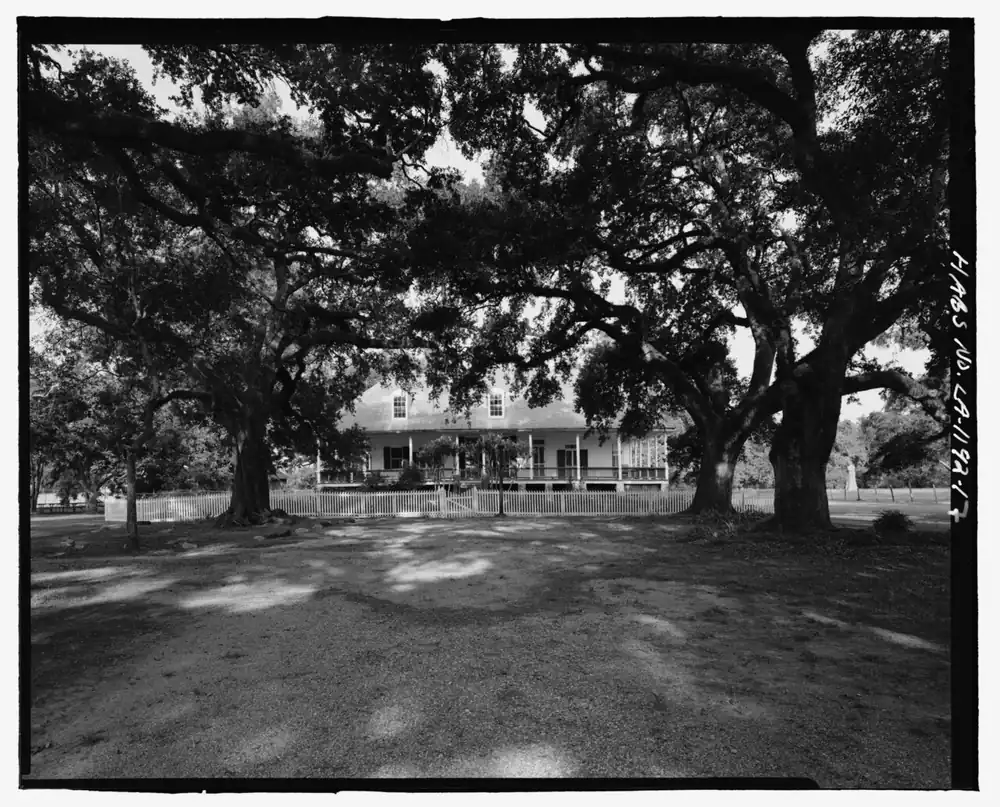
    The main house at Oakland Plantation, one of the park’s two plantation units.
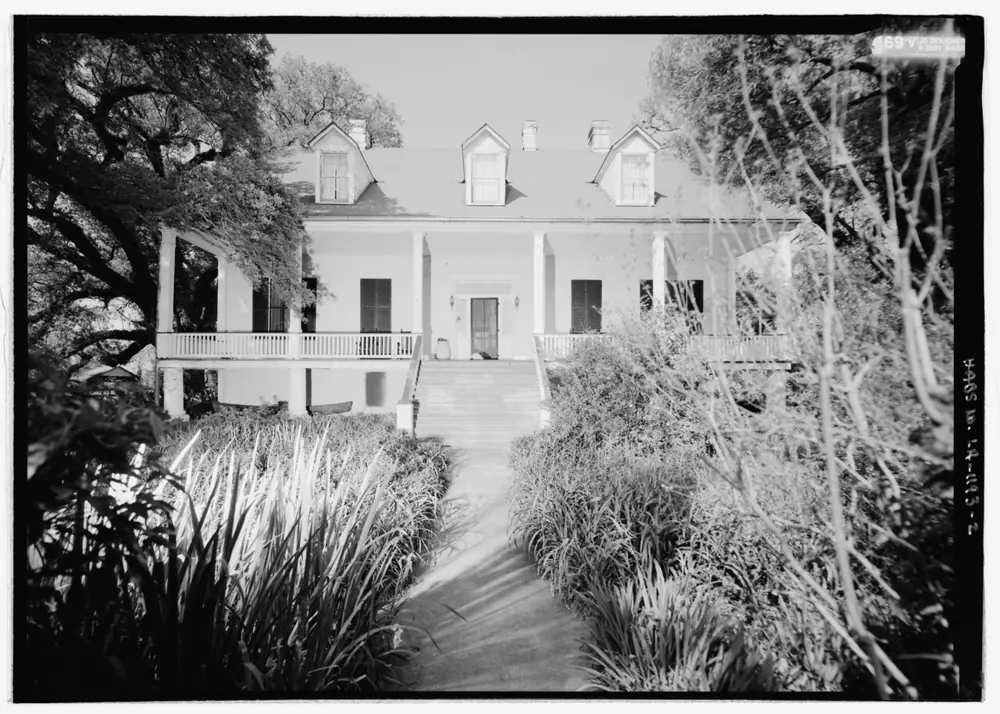
    The main house at Magnolia Plantation, one of the park’s two plantation units.

    Grounds at both sites open Wednesday through Sunday, 9:00 a.m. to 3:30 p.m.; the park closes Mondays, Tuesdays, and federal holidays (National Park Service, 2025). Ranger-led tours run on a regular basis for small and large groups (National Park Service, 2025).

    The Fall Since 2019

    Visits peaked at 29,922 in 2019, then dropped sharply in 2020 (NPS Visitor Use Statistics, 2019).

    Pandemic-year visits totalled 17,430 in 2020, a fall of 41.7% in one year (NPS Visitor Use Statistics, 2020).
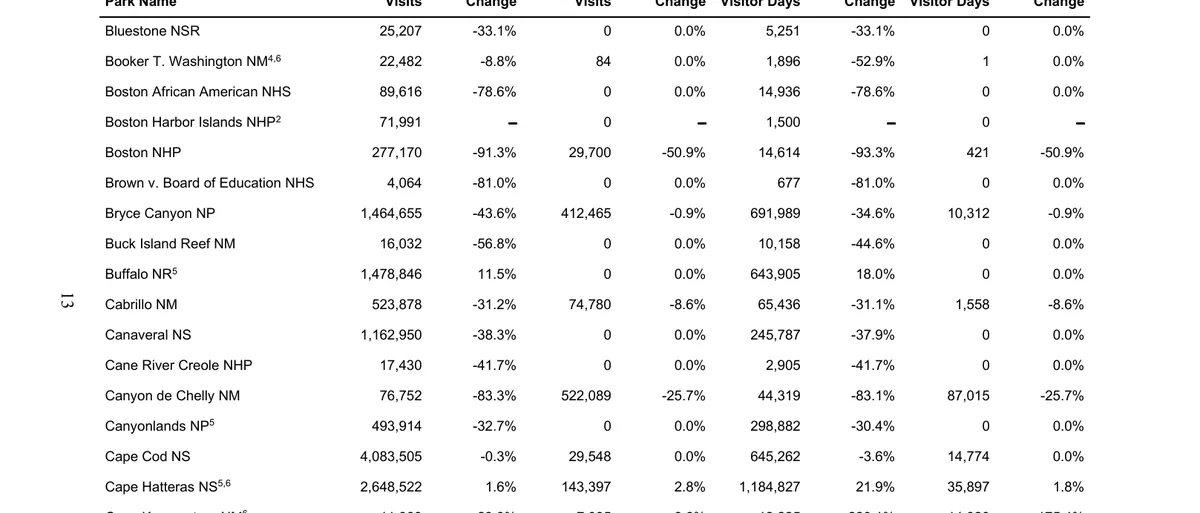
    NPS Statistical Abstract 2020, Table 5: Cane River Creole NHP, 17,430 recreation visits in 2020, down 41.7% from 2019.

    The 2021 total fell to 14,984, down 14.0% from 2020 (NPS Visitor Use Statistics, 2021).

    Year Recreation visits Change from prior listed year
    2019 29,922 —
    2020 17,430 −41.7%
    2021 14,984 −14.0%
    2022 14,811 −1.2%
    2023 11,701 −21.0%
    2024 12,592 +7.6%
    2025 11,203 −11.0%

    Visits by year (Table 1), with 2022 and 2023 from the visitor spending reports. Counts come from NPS Visitor Use Statistics, as reported for each year and read 23 November 2026, with changes calculated from the published counts
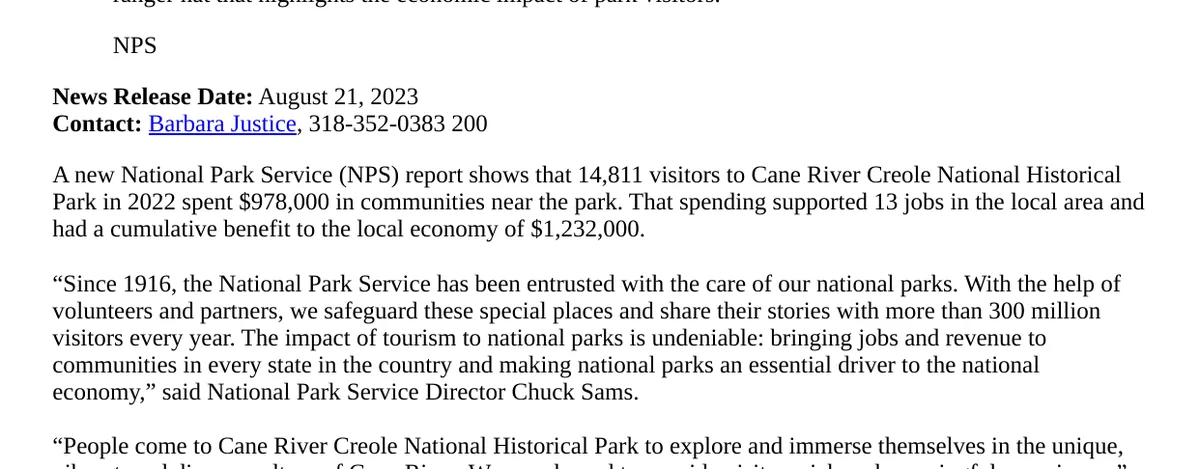
    NPS news release, 21 August 2023: 14,811 visitors to the park in 2022 spent $978,000 in nearby communities.
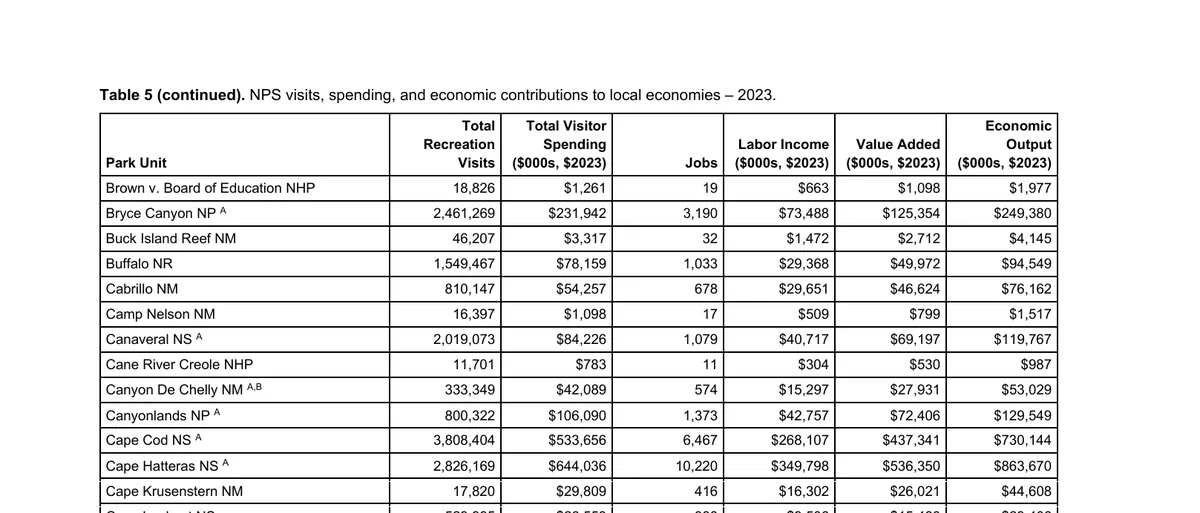
    2023 National Park Visitor Spending Effects, Table 5: Cane River Creole NHP, 11,701 total recreation visits in 2023.
    WhenToVisitParks, citing NPS Visitor Use Statistics 2002–2025: the park “recorded about 12,592 recreation visits in 2024.”

    What the Count Leaves Out

    Visit counts track entries, not readers, researchers, or festival crowds.

    A quiet park year can still mean a busy year for books, classrooms, and family-history searches.

    Anyone reading the fall as a verdict on the culture itself would be stretching the data past its limits.

    Frequently Asked Questions

    How many people visited the park in 2025?

    11,203 recreation visits, down from 12,592 in 2024 (NPS Visitor Use Statistics, 2025).

    When did visits peak?

    2019, at 29,922 visits, the highest count in the figures available (NPS Visitor Use Statistics, 2019).

    How far have visits fallen since that peak?

    62.6% below 2019, with 2025 drawing little more than one-third of the peak total.

    What does the park protect?

    Two French Creole cotton plantations, Oakland and Magnolia, with 65 historic structures across 62.36 acres (National Park Service, 2018).

    About These Figures

    Visit counts come from National Park Service Visitor Use Statistics, as published for each year and read on 23 November 2026.

    Percentages were calculated from the published counts, and the calculation is stated wherever it appears.

    The 2022 and 2023 counts come from the visitor spending reports.

    References

  • Kouri-Vini Counts About 5,000 First-Language Speakers, Wendte Snapshot Finds

    Main image: AI illustration.

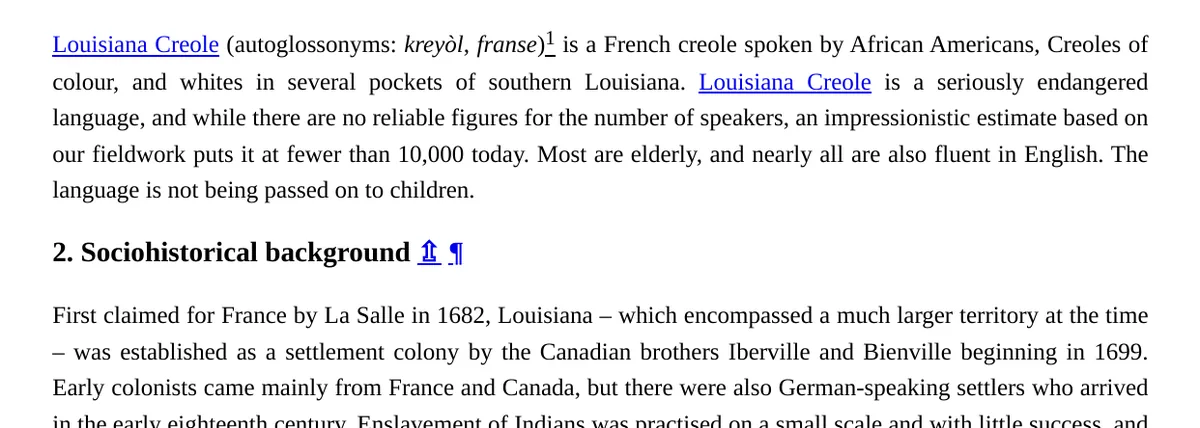
    Louisiana Creole, known by its speakers as Kouri-Vini, counts fewer than 10,000 native speakers (Wendte, 2024).

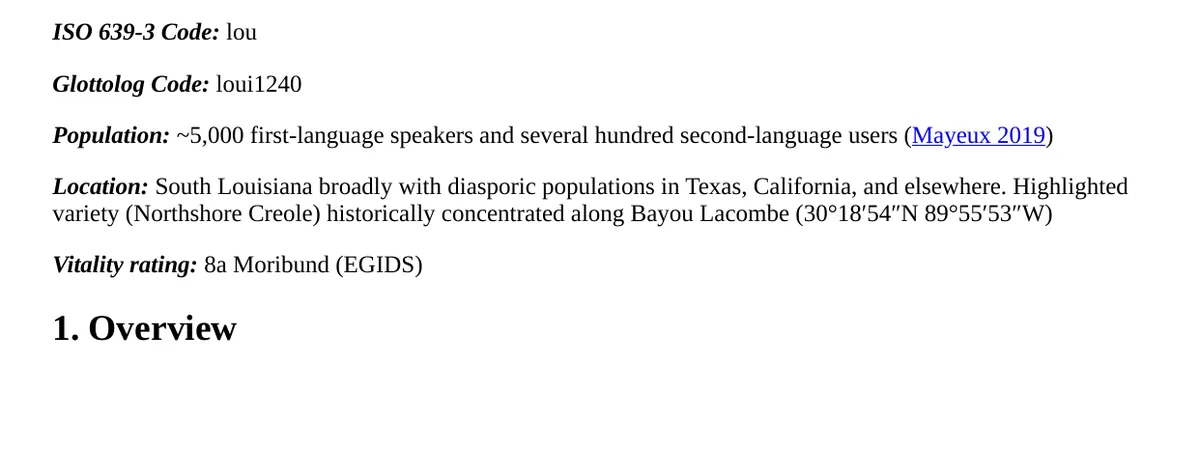
    About 5,000 of them speak it as a first language, with several hundred more using it as a second language (Mayeux, 2019, in Wendte, 2024).

    Nathan Wendte published those figures in a 2024 language snapshot in Language Documentation and Description (Wendte, 2024).

    What the Snapshot Counted

    Wendte drew the first-language figure of about 5,000 from Mayeux’s 2019 estimate (Mayeux, 2019, in Wendte, 2024).

    Wendte (2024), Language Documentation and Description 24(1): “Population: ~5,000 first-language speakers and several hundred second-language users (Mayeux 2019)”; “Vitality rating: 8a Moribund (EGIDS)”.

    Total native speakers still number fewer than 10,000 as of 2023 (Wendte, 2024).

    APiCS Online, Louisiana Creole: fieldwork puts the number of speakers at “fewer than 10,000 today.”

    Where Speakers Remain

    Speakers concentrate in three areas of south Louisiana (Wendte, 2024).

    Saint Martin Parish along Bayou Teche holds one pocket, and Pointe Coupee Parish along False River holds another (Wendte, 2024).

    A third pocket runs along the Mississippi River between New Orleans and Baton Rouge (Wendte, 2024).

    Measure Figure
    Native speakers Fewer than 10,000 (2023)
    First-language speakers About 5,000 (2019)
    Second-language users Several hundred (2019)
    Vitality rating 8a, Moribund (EGIDS)
    Speaker concentration areas 3

    Speaker counts (Table 1). Figures come from Wendte (2024), read 23 November 2026; first-language figures rest on Mayeux (2019).

    Cane River itself once had a Creole-speaking population (Wendte, 2024).

    Today the language has effectively stopped passing from parents to children there (Wendte, 2024).

    A Revitalisation Movement Grows

    Younger speakers are learning Kouri-Vini through a revitalisation movement that Wendte calls established (Wendte, 2024).

    That movement has produced a sizeable number of competent younger speakers, even as elder mother-tongue speakers age (Wendte, 2024).

    Revival changes the story from simple decline to decline plus deliberate recovery.

    Frequently Asked Questions

    How many Kouri-Vini speakers are left?

    Fewer than 10,000 native speakers, as of 2023 (Wendte, 2024).

    How many speak it as a first language?

    About 5,000, plus several hundred second-language users (Mayeux, 2019, in Wendte, 2024).

    Where do speakers live?

    Saint Martin Parish, Pointe Coupee Parish, and the Mississippi River parishes between New Orleans and Baton Rouge (Wendte, 2024).

    Is the language endangered?

    Yes, rated 8a Moribund on the EGIDS scale, with intergenerational transmission effectively stopped (Wendte, 2024).

    Is anyone still learning it?

    Yes, a revitalisation movement has produced a sizeable number of competent younger speakers (Wendte, 2024).

    About These Figures

    Speaker figures come from Nathan Wendte’s 2024 language snapshot, read on 23 November 2026.

    First-language numbers rest on Mayeux’s 2019 estimate, as cited inside that snapshot.

    No parish-level count for Natchitoches Parish was found, so this report stays with the statewide figures.

    References

  • Seventy Years On, Clementine Hunter’s Nine African House Murals Still Tell the Cane River Story

    Main image: AI illustration.

    Clementine Hunter painted nine African House murals in 44 days in the summer of 1955 (Louisiana Office of Culture, Recreation and Tourism, 2015).

    She worked from 8 June to 21 July 1955, aged approximately 67 (Louisiana Office of Culture, Recreation and Tourism, 2015).

    Seventy years later, in 2025, the murals still anchor the story of Cane River’s Black community (Smithsonian American Art Museum, undated).

    Nine Panels in 44 Days

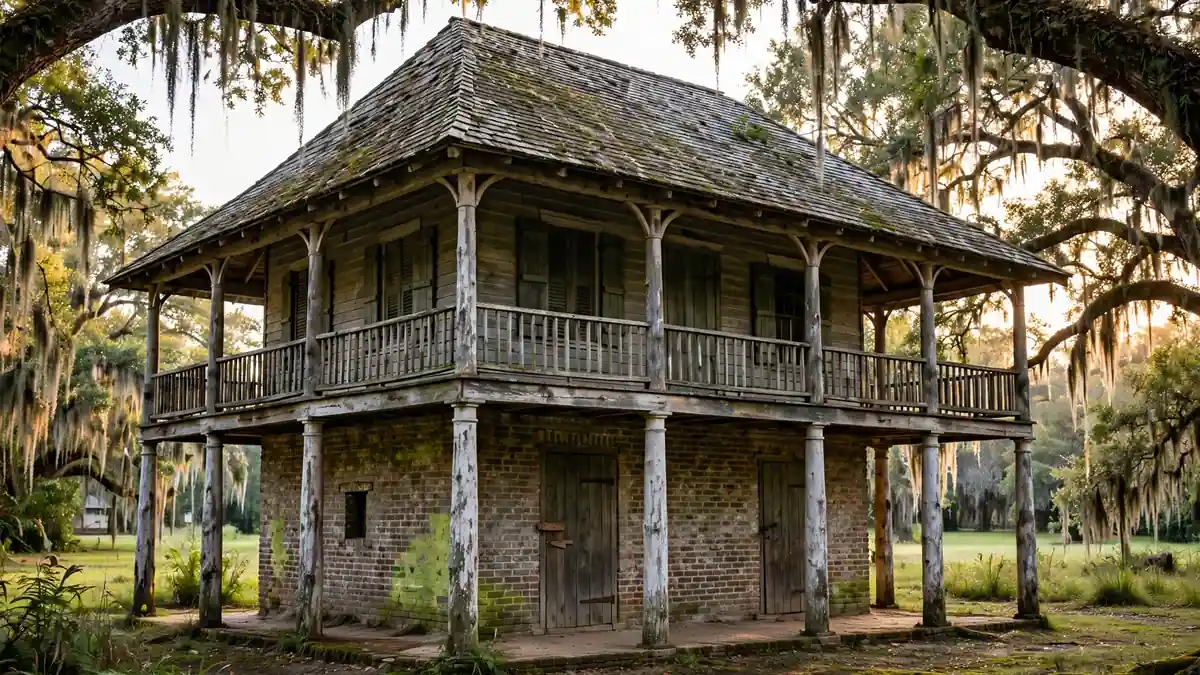
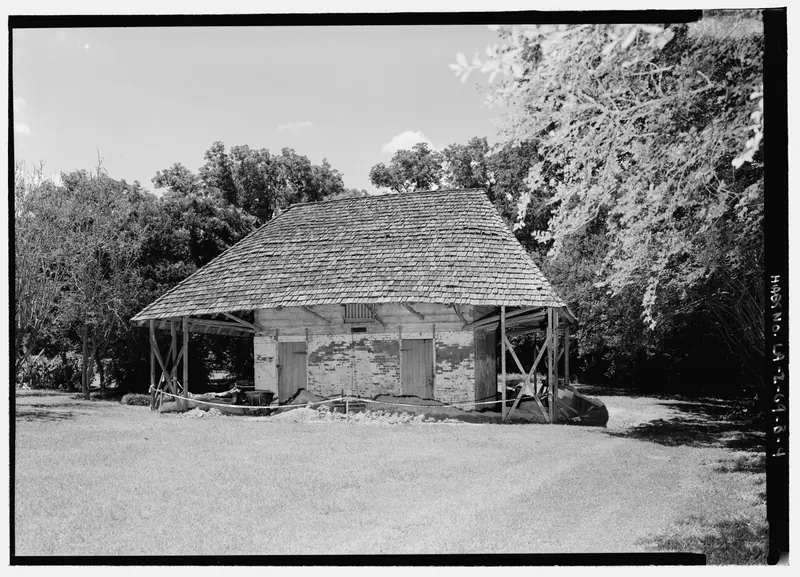
    The African House at Melrose Plantation; Hunter painted the nine murals on its upper floor.

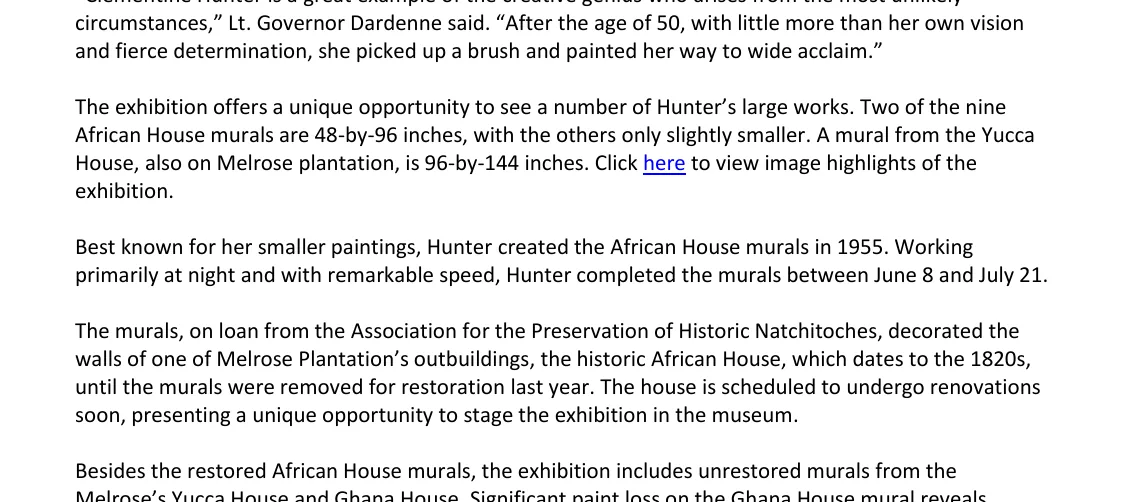
    Two of the nine murals measure 48 by 96 inches, with the others only slightly smaller (Louisiana Office of Culture, Recreation and Tourism, 2015).

    Louisiana Office of Culture, Recreation and Tourism (2015): two of the nine African House murals measure 48 by 96 inches. The murals were completed between 8 June and 21 July 1955.

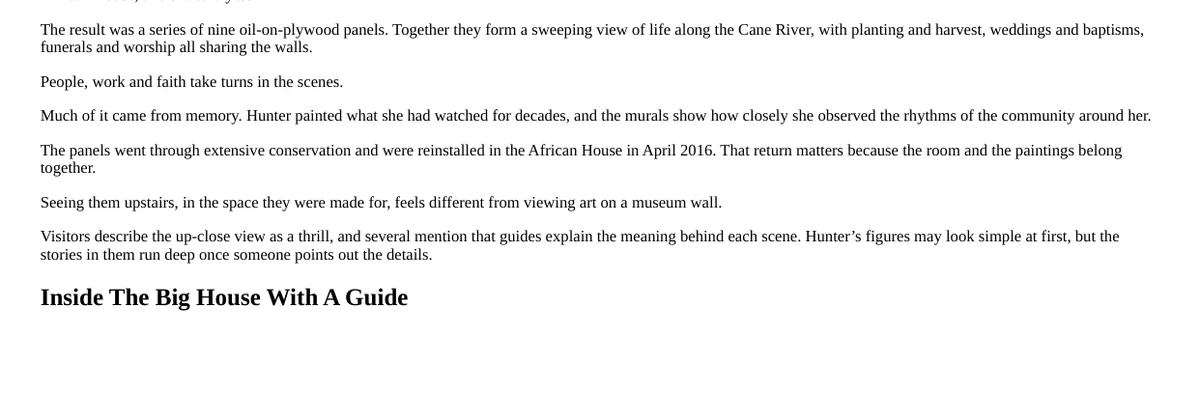
    They returned to the African House at Melrose Plantation in April 2016 (TravelMag, 2026).

    TravelMag (2026): the panels “went through extensive conservation and were reinstalled in the African House in April 2016.”

    She worked mostly at night, painting scenes from memory (Louisiana Office of Culture, Recreation and Tourism, 2015).

    Her subjects included cotton harvests, weddings, baptisms, wash day, and pecan harvests (Russell Collection, undated).

    François Mignon, Melrose curator, proposed the project, and Hunter accepted it at an age when most people retire (Shiver and Whitehead, 2005).

    The same press release: François Mignon suggested the murals to Hunter, who was approximately 67 years old at the time.

    Measure Figure
    Murals 9
    Days to paint 44
    Dates 8 June to 21 July 1955
    Hunter’s age Approximately 67
    Largest panels 48 by 96 inches
    Years since painting 70 in 2025

    Mural counts (Table 1). Figures come from the Louisiana Office of Culture, Recreation and Tourism (2015), read 23 November 2026

    A Life in Numbers

    Her birth came in late December 1886 or early January 1887 at Hidden Hill Plantation (64 Parishes, undated; Russell Collection, undated).

    Melrose became her home around 1900, when her family moved there and she was about 13 (Louisiana Office of Culture, Recreation and Tourism, 2015).

    Hunter died on 1 January 1988, aged about 101, after producing over 5,000 paintings (Westmoreland Museum of American Art, undated; 64 Parishes, undated).

    Estimates of her lifetime output run higher, up to 10,000 paintings (Russell Collection, undated).

    The 1955 Breakthrough Year

    In 1955 she became the first African American artist with a solo show at the Delgado Museum (64 Parishes, undated).

    Segregation kept her from attending her own opening that year (Westmoreland Museum of American Art, undated).

    Northwestern State University later gave her an honorary Doctor of Fine Arts in 1986 (Russell Collection, undated).

    Frequently Asked Questions

    How many African House murals did Clementine Hunter paint?

    Nine large panels, plus smaller panels between doors and windows on the upper floor (Louisiana Office of Culture, Recreation and Tourism, 2015; Cordella Press, undated).

    How long did they take?

    44 days, from 8 June to 21 July 1955 (Louisiana Office of Culture, Recreation and Tourism, 2015).

    How old was Hunter when she painted them?

    Approximately 67 years old (Louisiana Office of Culture, Recreation and Tourism, 2015).

    Where are the murals now?

    Inside the African House at Melrose Plantation, where Hunter painted them (Smithsonian American Art Museum, undated).

    How many paintings did Hunter make in her lifetime?

    Over 5,000 paintings, with some estimates reaching 10,000 (Westmoreland Museum of American Art, undated; Russell Collection, undated).

    About These Figures

    Mural dates and sizes come from the Louisiana Office of Culture, Recreation and Tourism press release, read on 23 November 2026.

    Life dates come from 64 Parishes and the Russell Collection, and the painting total from the Westmoreland Museum of American Art and the Russell Collection.

    Hunter’s exact birth date is unknown, so this report gives the range the sources use.

    References